Friday, May 05, 2006

The American Visionary Art Museum


self-portrait at the American Visionary Art Museum (outside of building)


Baltimore, MD, Red Emma's and
the American Visionary Art Museum.

We left Philadelphia and headed to Baltimore, MD, the city where our roommate Hillary went to college. We weren't really sure what to except of Baltimore. I've been there a couple times before but only in a very passing-through kind of way. We had everything set up to show the documentary at Red Emmas, a coffeeshop/bookstore/infoshop place in this really busy commercial district. (the Mount Vernon Neighborhood)
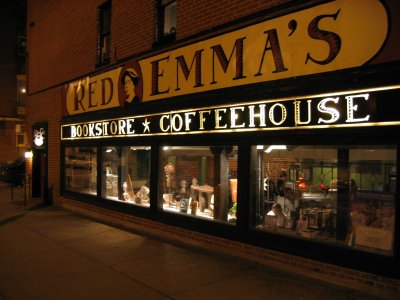


They have an amazing sign of Emma Goldman on the front of the business. It is only about a year old but it looks amazing. They did all kinds of construction themselves and fixed it up really nice. It's the kind of place where people just walking down the street will stop in for a cup of coffee and then maybe look at the information and books on sale and maybe get into a conversation. It seemed really successful, judging by the brief time that we were in the space.

The really cool thing about Red Emma's is that they were very careful about planning their business plan and have set things up so that it is a real worker-run collective and they are even able to pay themselves (the people that work there). We walked around the neighborhood a little bit while the documentary played and got in touch with Hillary's old college friend Caryn, who was nice enough to let us stay with her.

Her girlfriend Leslie and she live together and they told us about a great place to check out while we were in Baltimore, called the American Visionary Art Museum.


The building itself.
(notice the construction in the background. more lofts?)

It was the best experience I have ever had in a museum. They have all art produced by self-taught artists that the curators consider "visionary art." It was amazing.

A decorated tree outside the museum.

Here is what they have to say on their website:

"Visionary art as defined for the purposes of the American Visionary Art Museum refers to art produced by self-taught individuals, usually without formal training, whose works arise from an innate personal vision that revels foremost in the creative act itself." The German origin of the word "folk," or volk, suggests "of the people." The term "folk art" can be applied in the broadest sense: it's art of or by the people. At AVAM, we don't define visionary art as "folk art," or even "contemporary folk art," principally because organizations like the National Endowment for the Arts rightfully define folk art as art coming out of a specifically identifiable tradition. Folk art is "learned at the knee" and passed from generation to generation, or through established cultural community traditions, like Hopi Native Americans making Kachina dolls, sailors making macramé, and the Amish making hex signs. The "contemporary folk art" label isn't appropriate for AVAM either, since we like to show works created by self-taught artists who may have lived hundreds of years ago, alongside work that may have been created last year. The exhibition themes we choose to explore are, thus, innately timeless -with the power to inspire human beings in highly personal acts of creation. Unlike folk art, visionary art is entirely spontaneous and individualized.

The current exhibit was called "Race, Class, Gender, (doesn't equal) Character." There were so many amazing pieces by different artists, usually using found, discarded materials. The pieces were usually intensely personal and place-based. We spent three hours in there and didn't even notice the time passing. I can't rave enough about this museum.

There was also this really cool thing that was part of the permanent collection about the Baltimore-based folk art of "screen painting." There would usually be a screenpainter in each neighborhood. It began in 1913 by William Octavec. It is the phenomenon of painting window screens in order to beautify shop windows but still allow air into the building, and also to offer privacy to homes/shops. It took off and became a real tradition in Baltimore. We watched a short documentary about it. Neither of us had ever even heard about this....


The ring I got in the museum gift shop.

Tuesday, May 02, 2006

Philadelphia

We got to Philadelphia on Sunday night, leaving the splendor of New York City, (or "THE city" as the call it in New York) behind us. New York was fun. We stayed with our friend Katie, who lives in Brooklyn. We did things like go to Coney Island and Central Park and stuff ourselves with delicious food. There was no screening in New York, although we had intended to do something at Bluestockings, it just didn't work out.

On Sunday night we were supposed to have been doing a screening at the A-Space but then realized that it probably wasn't going to happen considering that Courtney hadn't gotten a response on email from the person setting it up in months (and also we weren't on their calendar on their website ). So we went to my friend Davin's apartment and walked downtown to go to Kingdom of Vegetarians, a famous vegan mockmeat Chinese restaurant. We stuffed ourselves and then walked back to her apartment.

The next day Monday, May 1, was our screening at Temple University. I had been pretty excited about doing something here because the person setting it up was this guy Juris who I contacted on the Space and Place listserv that I'm on. I had asked him a while ago if he thought that he might be able to set something up or knew of a student group that might be interested in sponsoring us. He suggested the Graduate Association of Visual Anthropologists. This was the first time on the entire trip that the people sponsoring us were officially associated with anthropology at all. The response from the people who came was definitely different in a noticable way. It was actually nice to get questions about ethnography and the way that we conducted our "fieldwork" and questions about how we incorporated theory into our documentary.

It was also nice because we got to meet this woman Courtney, a grad student in the visual anthropology department who helped do a lot of the work to help bring us to campus. She showed us around the media lab and showed us her short film that she did while in Tokyo that kind of juxtaposes the craziness of modern everyday life in Tokyo with the traditional art of caligraphy.

The discussion after the screening actually went better than I think it has in a while. People just seemed genuinly interested in our project and they had things to say, opinions to contribute, etc.

It was also nice because we got to see James from the Wooden Shoe, who we interviewed for the movie. He came to the screening and invited us to go get a beer with him afterward. It was nice to talk to him and hear about how the Wooden Shoe has changed over the course of two years and how his thoughts on the project have changed. Hopefully today we'll get a chance to stop by the wooden shoe and take a look at it for ourselves to see how it has changed.

Sunday, April 30, 2006

Upstate New York and the beginning of spring


Upstate New York:
fragments of a region, as told through photos


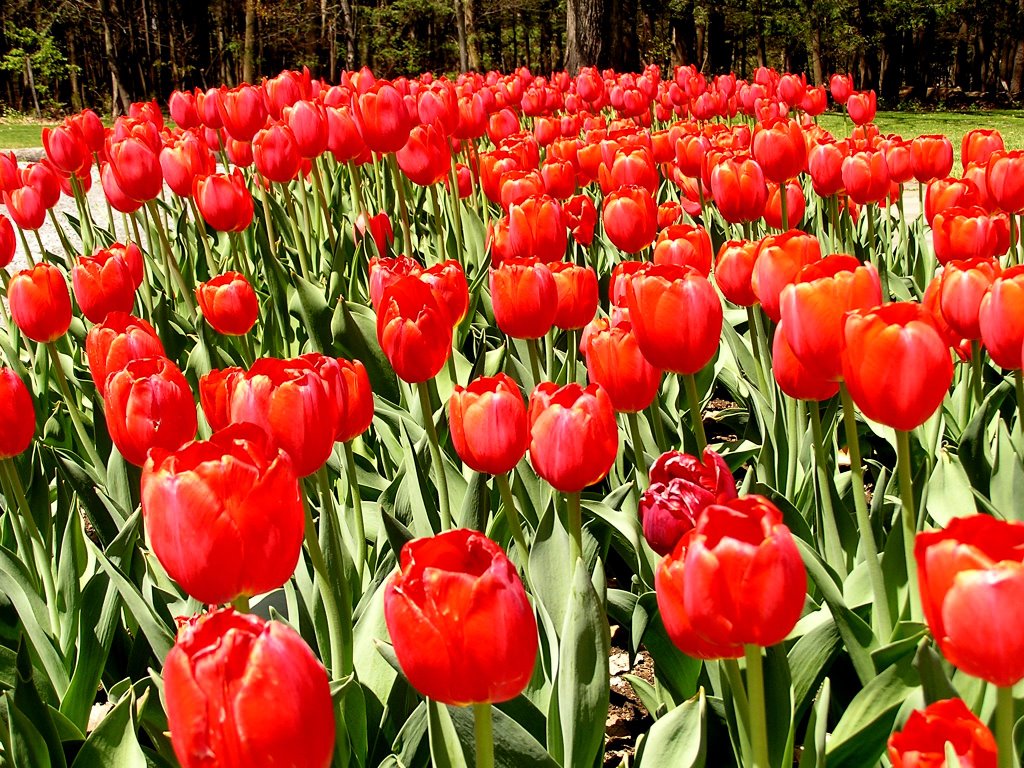
It's a beautiful region, especially at this time of year. We spent a few days driving around Upstate New York around the Catskills, after screening the documentary at Vassar College in Poughkeepsie and Bard College in Annondale-on-Hudson.

Here are some photos:

At the historic mansion near Bard College (we don't know what it was exactly and there was no signage explaining who it belonged to).


sunset in New Paltz, NY

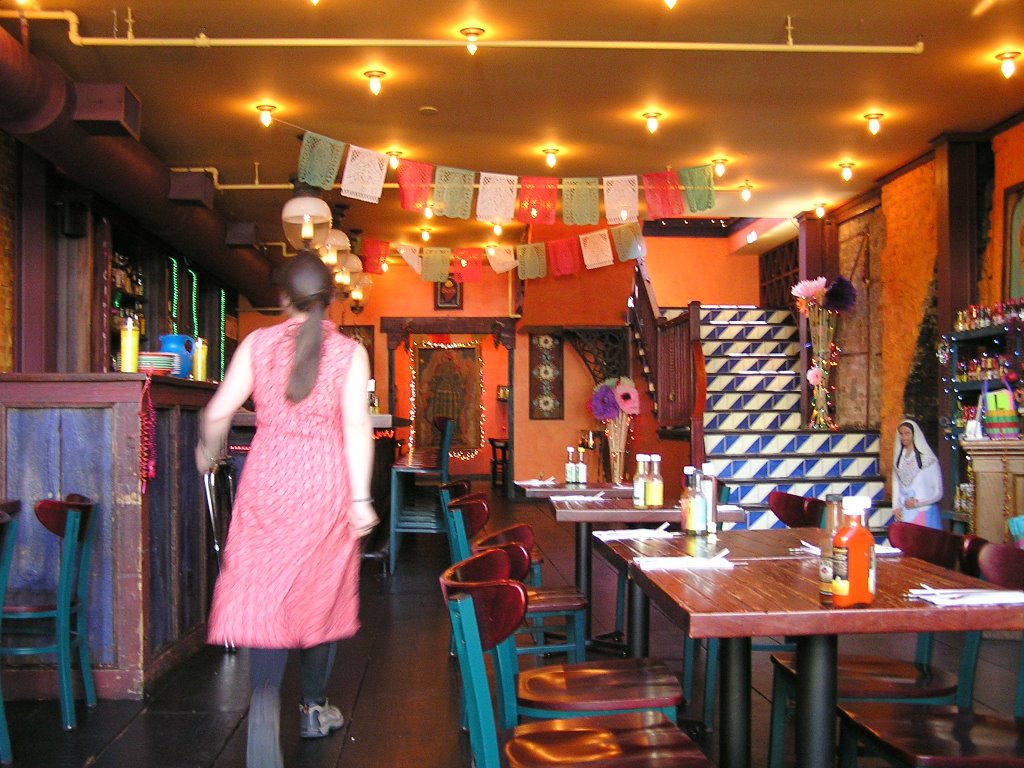
At an amazingly decorated mexican restaurant in Hudson, NY (supposedly the "next Hamptons").


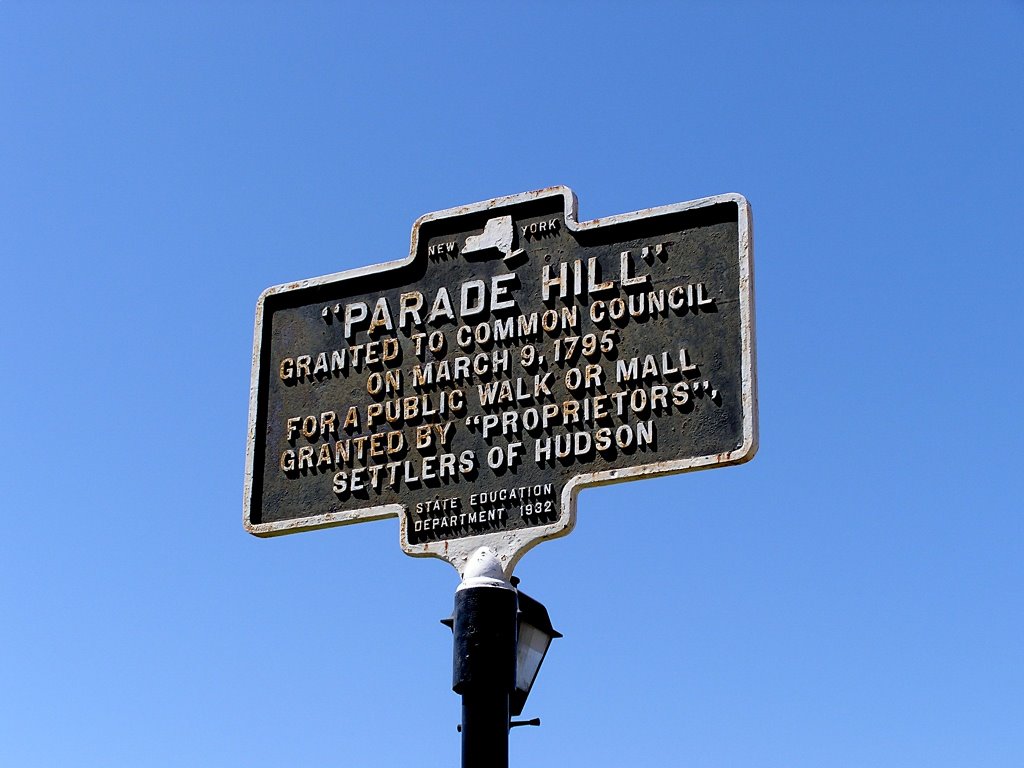
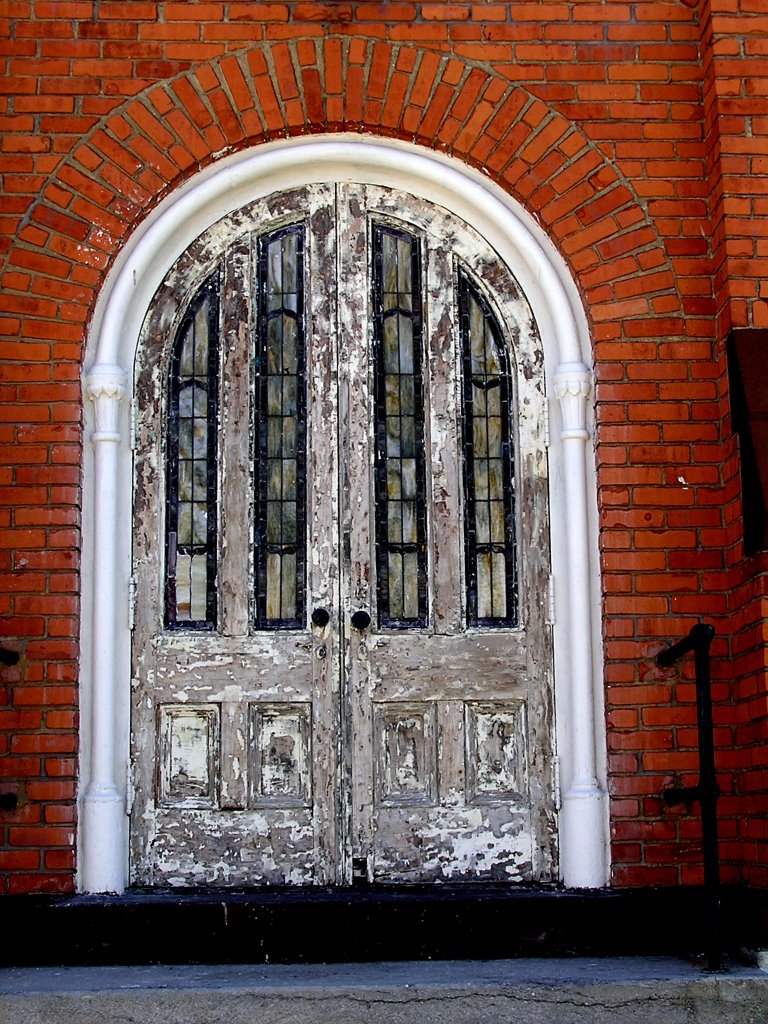
3 doors in Hudson, New York.

a strange boarded up building with art covering it in Hudson, NY

Saturday, April 22, 2006

Boston, Big Ol' Boston

This was only the second time I have ever been to Boston. It was a good visit all around--great weather. One of my very good friends, Kevin, lives there now and so I got to visit with him. He lives in Brookline and coincidently another friend of mine, Gabe, was staying there too. I hadn't ever been in that part of Boston and it was much less of a suburb than I would have guessed from what our roomate Hillary describes as the town she grew up in. We stayed with our friend Nick in Somerville, which is a part of town on the other side of the Charles River, north of Cambridge. It is another neighborhood I wouldn't have thought to be so well layed out and accessible to interact in. Boston has really great squares that function fully as public space even though they are often centered on economic exchange. Davis Square in Somerville was one of those places. Maybe I'll try to find a picture and post it later.

But, yeah, getting around was much easier this time and it was really great to see familiar faces in a large city that I didn't know. It was getting a bit tiring not having that familiarity. Though another familiar feeling that I wished I hadn't had to feel in Boston was a feeling of "being erased" as liz would aptly put it. We screened the film at the opening night of the New England Anarchist Book Fair. It was a really well attended and organized event that must have taken a lot of coordination. Yet, it was really startling how much it felt like the presence of Liz and me wasn't of much concern to anyone organzing the screening. Though I had been in communication with a person for quite a while about being a part of the event, it wasn't until we got to Boston and saw a poster for the opening that we realized how much we (liz and i as people) weren't really supposed to take part in the event. Our names weren't on the poster as the filmmakers, nor was there mention that we would be present and ready to facilitate discussion and answer questions if that was what people wanted to happen.

It was weird to see, but then when we got to the community church in copley square it was even weirder to feel uncomfortable setting up a table with our dvds, cds, and t-shirts. People weren't rude at all--they just weren't very welcoming. No introductions from anyone but Scott, the person I was in touch with when trying to coordinate a screening, and even then it wasn't really an introduction as much as a, "Do you know where scott is? Oh, you're scott? Hi. I'm courtney, this is liz. Is there a place we can put this stuff? Oh, here? Thanks." And then I found him again to remind him that we usually did an intro to the film and facilitated a Q & A--that was okay, whatever we wanted to do. So, it was cool. We sat and listened to the speakers and saw people that we recognized from doing interviews, but were shy to just go up and talk to them (though I did have a nice conversation at the end of the night with a person, Roger, that we had interviewed). There was a reception before the film was to start and the night was already running late--so it seemed like we should probably just have a short Q & A, if at all--but it was hard to find someone to talk to about what they wanted to have happen. The film was set up and we were sitting on the stage to introduce the 25th screening of the film. We were really tired at this point and the woman that was MCing for the night needed to pass the hat for all the people coming in from out of town for the book fair. She mentioned a couple people but failed to mention that we had also come from out of town and were on a north american tour--we never expect to get money--but it is weird to be waiting to introduce the film we have been on tour with and not be mentioned at all as being a guest in town. Was it because we solicited the LPC to screen the film in Boston? I don't know, but we weren't note worthy enough, I guess.

So we introduce the film--it plays. There is some concern about it's length because the night started late and the men that were speaking before the reception spoke over time--there was a band of two men that needed to get on stage after the film. While Liz was sitting at our table a random man came over to her TWICE and complained about the length of the film. He kept asking when it would be over--she apologized for being such a burden, but he didn't get the joke. As the movie was ending we realized that we shouldn't do the Q & A--it would take too much time. But, I couldn't see where Scott or the other people I recognized as organizers were through the crowd. I went up to the front and waited for a time that I could get someone's attention to let them know that we didn't think it would be wise to have a Q & A. But, as the credits came on screen the lights promptly went up and I was informed indirectly by a person on stage talking to the audience that we wouldn't really be having a Q & A--there would be a casual one while the band was setting up. No one even came over to where we were sitting and let us know. I don't know why. But it was obvious that the Q & A wasn't going to happen and that was fine. It was just really unthoughtful of the organziers not to at least let us know what they were thinking. Why was the time alotted for us most easily expendable--especially since it was known from the begining of the night that the event was running late?
It made me wonder if it was that important that we came at all and why it wasn't important enough to the organizers that they still hadn't introduced themselves or engaged in any sort of conversation with us about the event or what they were doing or anything, any polite conversation. The person MCing the event came over to the table as we were getting ready to pack up and the band was winding down. I thanked her for working that night and she responded that she was glad to do it--she had noticed only a week before the event that the night was full of white men speaking and she felt they needed to have some other people represented. A good observation, but one that falls pretty short with out her even knowing. We aren't men--Liz and I--but I guess the film isn't a person, even though we were planning to speak. Also, shouldn't it have been in the minds of the organizers even before they started putting the event together that the night shouldn't just be a representative sample of radical white men? She was well meaning--yet she unknowingly erased us. Just another time in the night where we weren't valued enough to be visible, to be thought of as real participants in the kick-off event or the weekend at all. Only while we were packing up our table were we told that we should have a table at the book fair the next day. I guess that is just an aside though. I wish this was more articulate, but I really just wanted to put something out there--a recounting of the nights events--one that maybe portrays how poorly people think out the way they treat people and how it is easy to erase people that are right in front of you. It's easy to not value what you don't have to consider. It's easy to not value people that aren't going to take the energy to be in your face or have the confidence to always assert themselves in every situation--especially if you are a (multi-)privileged person/community that has an oppositional identity that allows one to skirt around issues of privilege as simple as extending common courtesy and as easy to spot as gender privilege. Just because we're not aggressive about our accomplishments, our ideas, our works doesn't mean we don't get to be participants, doesn't mean we don't warrant the respect that a podeum and notes or a mic and a guitar warrants others. Watch out who you erase in your language and your actions, they might be your friends.

Maine, what a beautiful state


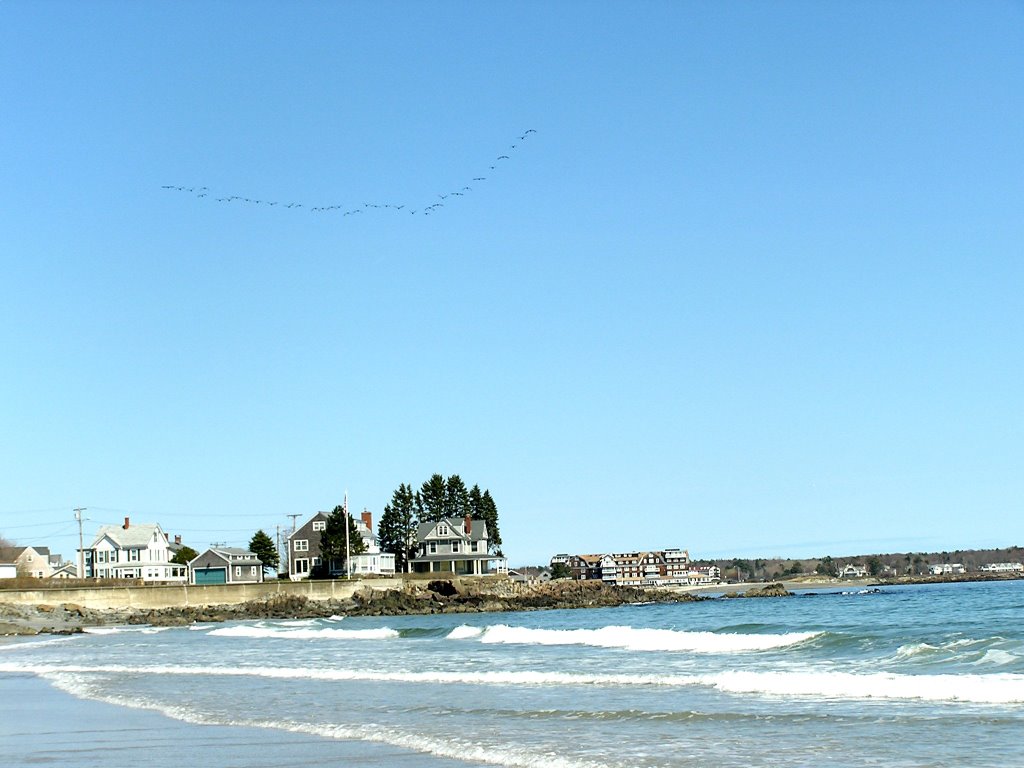
birds on the Maine coast


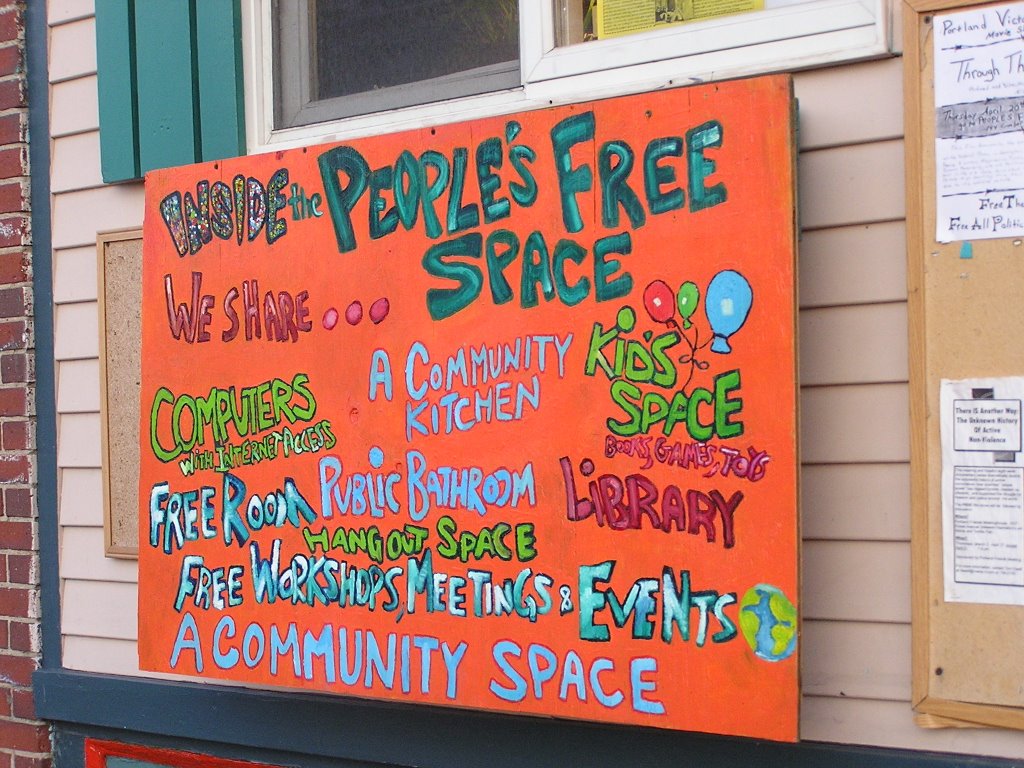
We screened the documentary in Portland, Maine, at the People's Free Space.

We didn't get to spend much time in Portland, unfortunately, but we took our time getting from Portland to Boston and took highway 1 all the way down. We stopped along the coast a couple of times in a fruitless effort to find the tourist haven of Kennebunkport. I've been intrigued by Kennebunkport since I had a job last summer selling gourmet pizzas at a farmer's market in Denver. The pizzas were "globally" themed and one of them was called the Kennebunkport (it had lobster, pieces of organic white corn, fresh mozzerella, and a white sauce). That pizza actually took first place in the food competition at the Cherry Creek Arts Festival. Anyway, there were millions of signs pointing us toward Kennebunkport but none of them actually led us there until our third try. Actually, I'm still not sure if we really found it, but we found something good enough.


A view off the coast


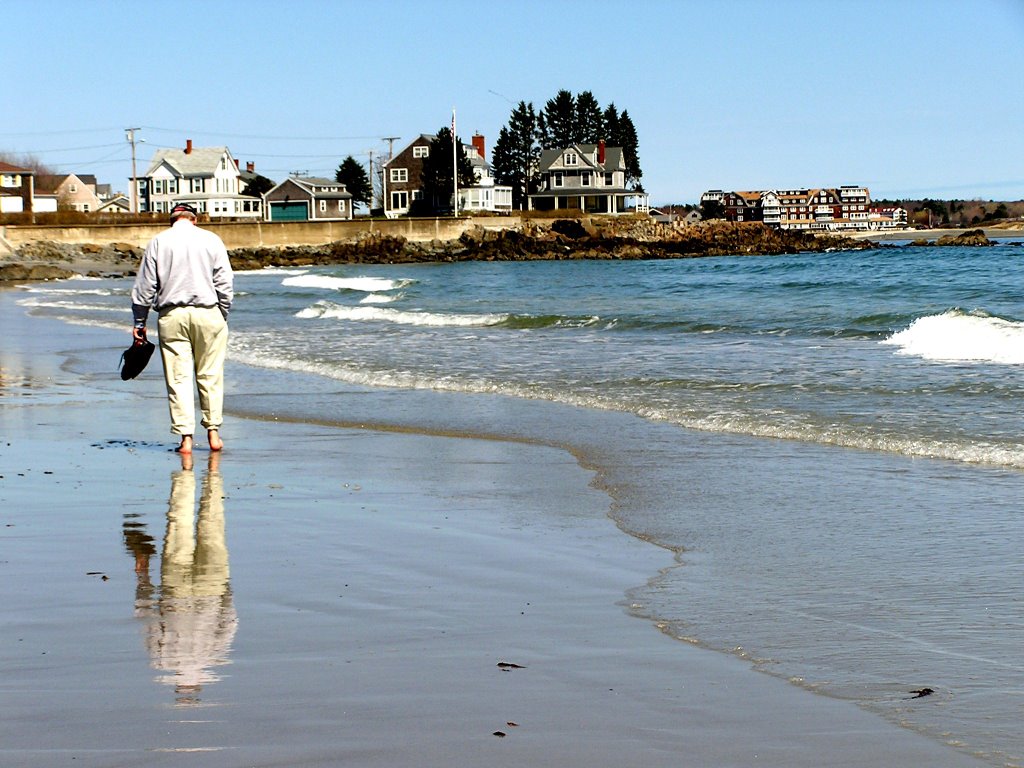
Man on beach


sand on beach


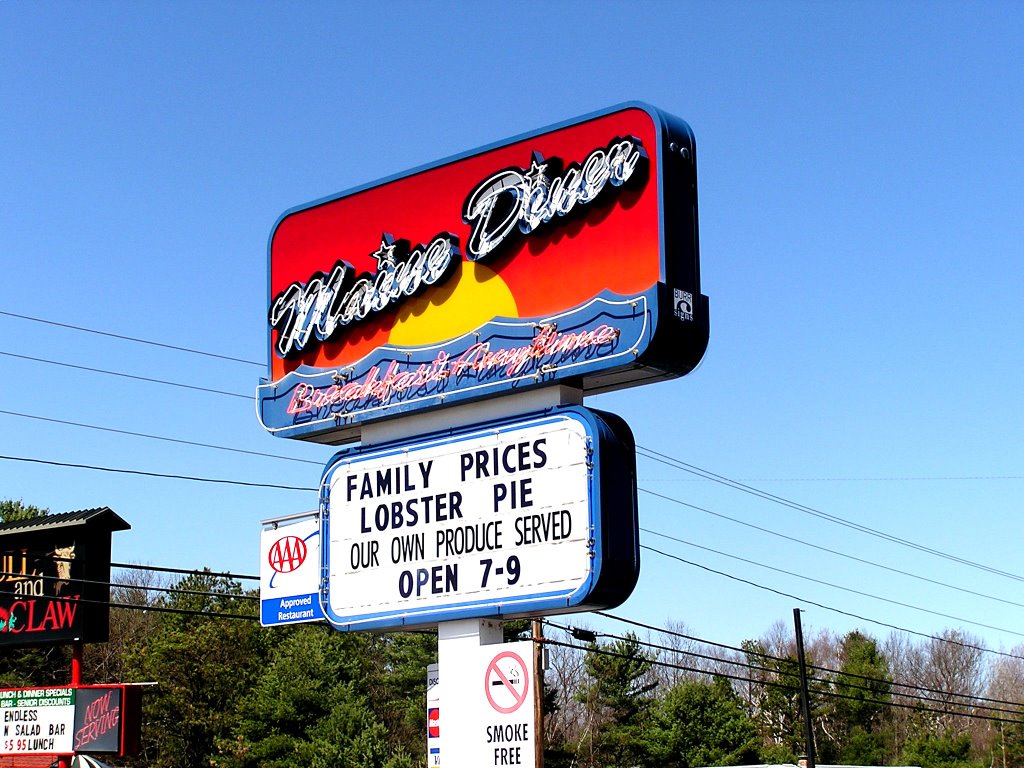
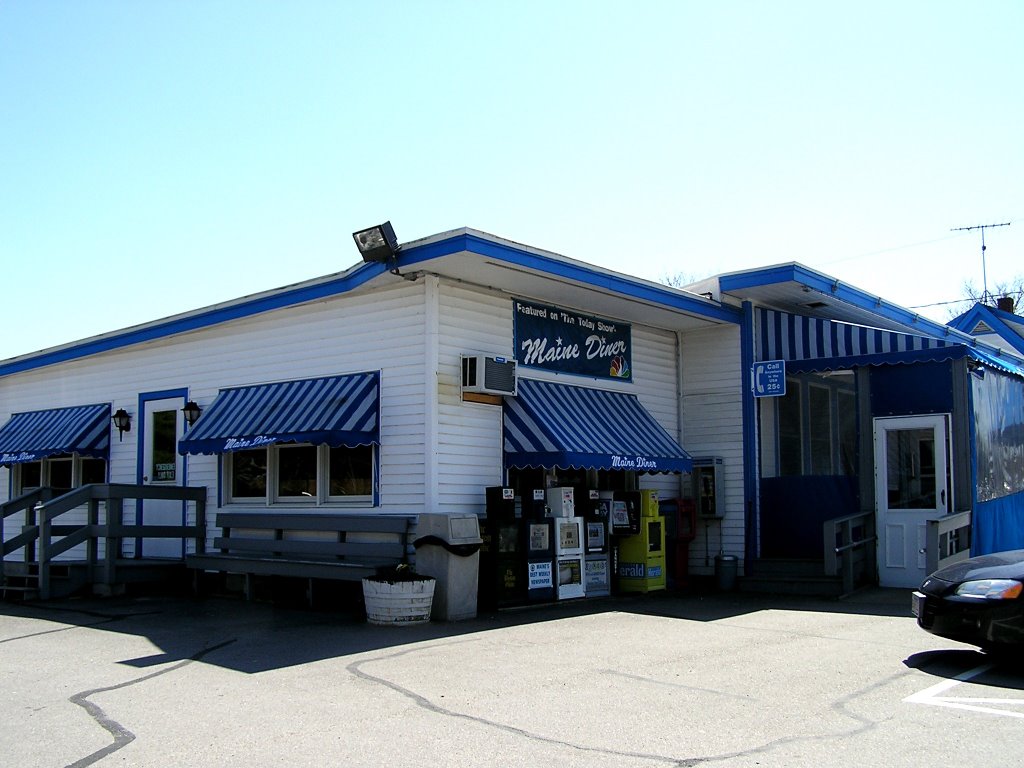
We stopped by the Maine Diner (as featured on the Today Show! yes, really!) for a semi-authentic experience of Maine. (or maybe just a touristified version) We got fries and iced tea and courtney got crab bisque (or something like that). She said it was some of the best soup she's ever had and that she was going to try to make me a vegetarian version using mushrooms and sherry. Yes, it's hard being a vegetarian on the road. It's especially frustrating not being able to try regional specialities and feeling like I'm missing out all the time. And only being able to eat potato products at cool old diners.


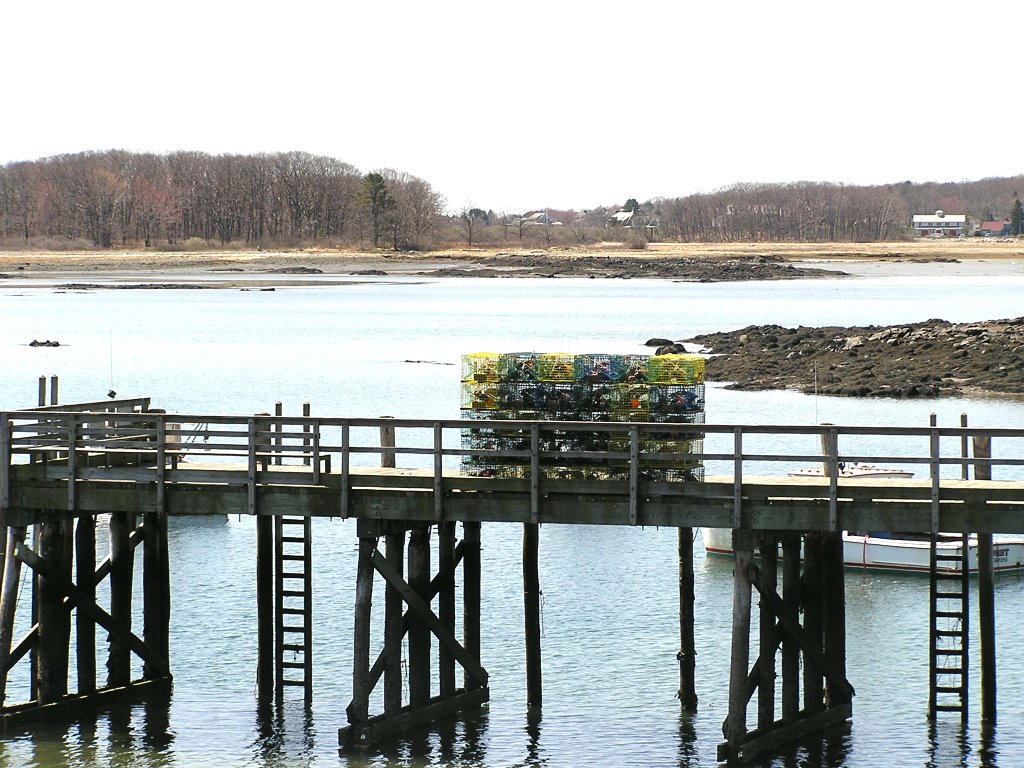
the archetypal lobster traps


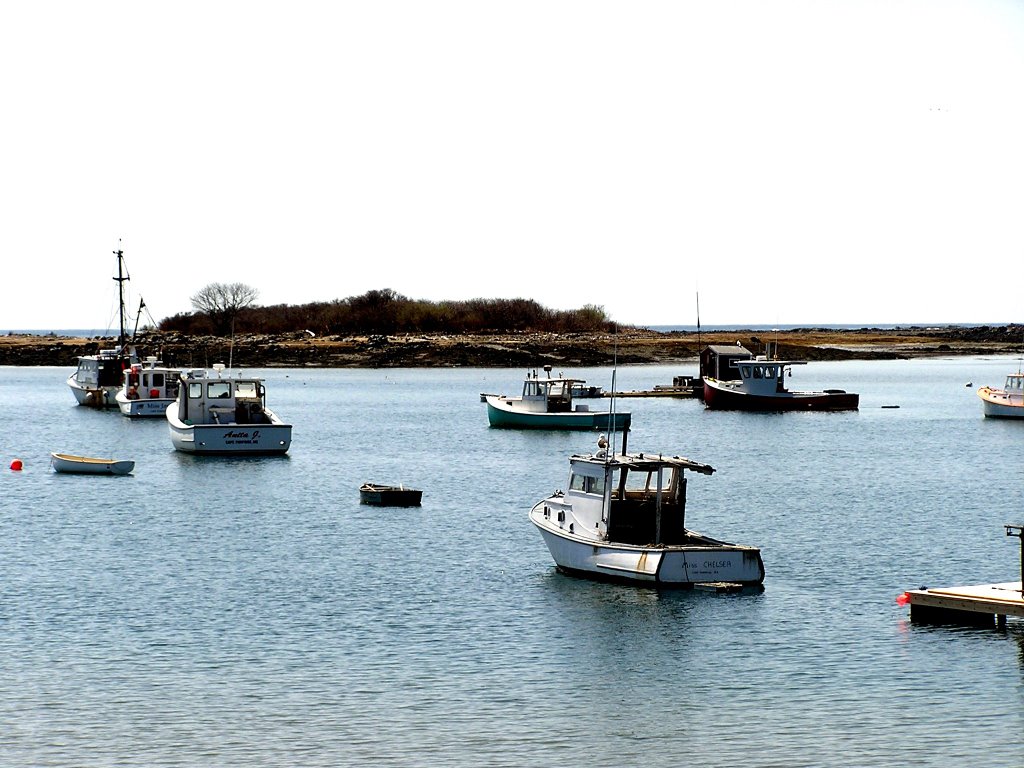
the archetypal lobster boats

stay tuned for boston (the city that hates me)

We screened the documentary in Portland, Maine, at the People's Free Space. We didn't get to spend much time in Portland, unfortunately, but we took our time getting from Portland to Boston and took highway 1 all the way down. We stopped along the coast a couple of times in a fruitless effort to find the tourist haven of Kennebunkport. I've been intrigued by Kennebunkport since I had a job last summer selling gourmet pizzas at a farmer's market in Denver. The pizzas were "globally" themed and one of them was called the Kennebunkport (it had lobster, pieces of organic white corn, fresh mozzerella, and a white sauce). That pizza actually took first place in the food competition at the Cherry Creek Arts Festival. Anyway, there were millions of signs pointing us toward Kennebunkport but none of them actually led us there until our third try.


A view off the coast


Man on beach


sand on beach


We stopped by the Maine Diner (as featured on the Today Show! yes, really!) for a semi-authentic experience of Maine. (or maybe just a touristified version) We got fries and iced tea and courtney got crab bisque (or something like that). She said it was some of the best soup she's ever had and that she was going to try to make me a vegetarian version using mushrooms and sherry. Yes, it's hard being a vegetarian on the road. It's especially frustrating not being able to try regional specialities and feeling like I'm missing out all the time. And only being able to eat potato products at cool old diners.

Thursday, April 20, 2006

Montpelier, Vermont April - 18 & 19


April 17 & 18 Montpelier, VT and Black Sheep Books/The Langdon St. Café

Montpelier is the smallest capitol of any state. It is really small-town seeming. Apparently a guy who lives in Florida owns half the rental property in town. Including the building that black sheep books and the langdon st. cafe rent. He drives up the prices by letting empty storefronts stay empty and doubling people's rent over night.

Here are some thoughts:
The Langdon St. Café and the tempeh reuben and maple-sweetened lemonade. They really capitalize off of the whole maple syrup thing. Very tourism-based economy. Went to Hubbard park, a wild butte with a huge castle-like tower at the top in the middle of a clearing. I could see everything for miles in every direction. There are no skyscrapers in Montpelier.

We stayed with Melissa and Collin, two members of the Black Sheep Book Collective. They lived in a really nice, big townhouse about 20 minutes (walking) from downtown. The view from their balcony was amazing. We had to walk through a graveyard to get to downtown. When we were walking home last night we realized that we could see a million more stars than usual. Montpelier doesn’t seem to light its roads very much.

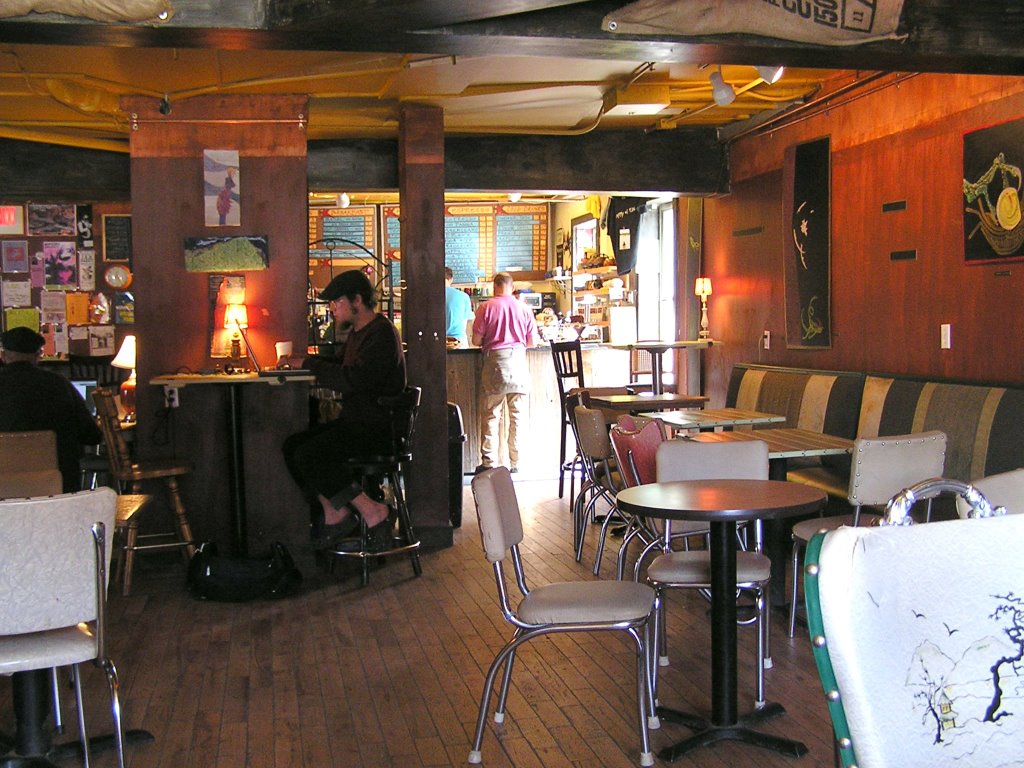
inside the cafe
The screening was sponsored by Black Sheep Books but happened in the Langdon St. Café. The café is worker-owned and operated and vegetarian. They had really good (reasonably priced) food and drinks.

After our documentary there was another documentary called "Life in a Box" about three men who fall in love while living in an RV (and two of them are in this band called Y'all). It was pretty good.

New Hampshire summed up- birch trees and scrapbooking stores in every town.

Cornell University & Ithaca, NY

old postcard of the cornell campus


April 15 & 16 Ithaca, NY and Cornell University

We hadn’t planned on going to Ithaca, NY until we got an e-mail from a guy named David Driskell while we were on the west coast. He had received an e-mail on an urban planning listserv that he’s part of, after Ava (the urban planning student in L.A.) sent something out.

He’s part of the city and regional planning department at Cornell University. He is also the chair of the UNESCO program called Growing up in Cities. The Growing up in Cities Program is really cool. They work with urban youth around the world trying to figure out ways for youth to have a greater voice in the way that cities are run and in their own lives. Here is their overview statement: We live in an urbanizing world, in which more and more children and young people live in cities. In industrialized countries, a half to three-quarters of all children live in urban areas; in the developing world, the majority of children and youth will be urban in the next few decades. Yet across a wide range of indicators, cities are failing to meet the needs of young people and their families.
What does the process of urbanization mean in the lives of young people?
From young people’s own perspectives, what makes an urban neighborhood a good place in which to grow up?
Can cities be positive places for young people-places that support and nurture their development as constructive, contributing members of a civil society?
Growing Up in Cities is a global effort to understand and respond to these and other questions, and to help address the issues affecting urban children and youth. It is a collaborative undertaking of the MOST Programme of UNESCO and interdisciplinary teams of municipal officials, urban professionals, and child advocates around the world, working with young people themselves to create communities that are better places in which to grow up-and therefore, better places for us all.

We were so flattered to be invited to Cornell by David. He also invited us to stay at his house with us wife Neema (who also teaches in the planning department at Cornell) and their two children, Mira and Keiren. None of us had realized that it was going to be Easter on the 16th, but everything had been planned and set up, so we decided to do it that day even though it meant not as many people would probably be able to make it to the screening. Staying with them during Easter also meant that we got to watch kids do an easter egg hunt and have an easter dinner with their family and friends (instead of sitting and silently staring at each other in an interstate denny's somehwere, like we probably would have).

Allison from Syracuse had told us about the Ithaca Commons (downtown pedestrian area with shops) and told us to go to the used bookstores and the co-op grocery store. I got two books at the used bookstore: Architecture of Fear and Cradle to Cradle. The Architecture of Fear is about the way that the built environment is a reflection of how scared our society has become (by examining things like gated communities). Cradle to Cradle is an environmentalist book about ending the concept of waste and talking about everyday objects and eco-design type stuff.


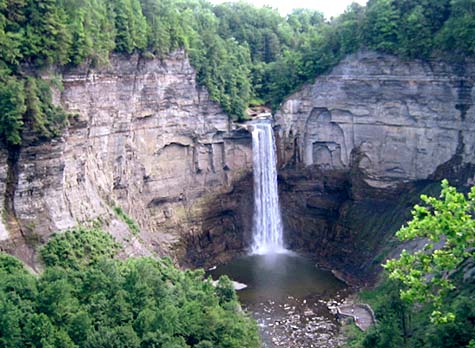
We also got to walk through one of the gorges (Ithaca has a lot of amazing gorges with little walkways through them) and saw some waterfalls and it was really cool. Here is an example of what we saw (I got the picture off the internet because I forgot to bring my camera with me).

We were really surprised that about 10 people came to a film-screening on Easter, but they did. We showed it in Sibley Hall.

Sibley Hall

Cornell is an insanely wealthy campus. David told us that they fundraise $300 million dollars a year, (that is not even counting student tuition or fees which are insanely expensive). There are 500 people on the paid staff of Cornell that do nothing but fundraise. Some of them are dedicated to getting money from only a few specific insanely rich people. What do they do with all that money? Sure, the campus is really nice, but it seems like people in the administration must be getting paid really, really well.

And then we went to Montpelier, Vermont... To be continued...

(all pictures in this entry were taken off the internet).

Sunday, April 16, 2006

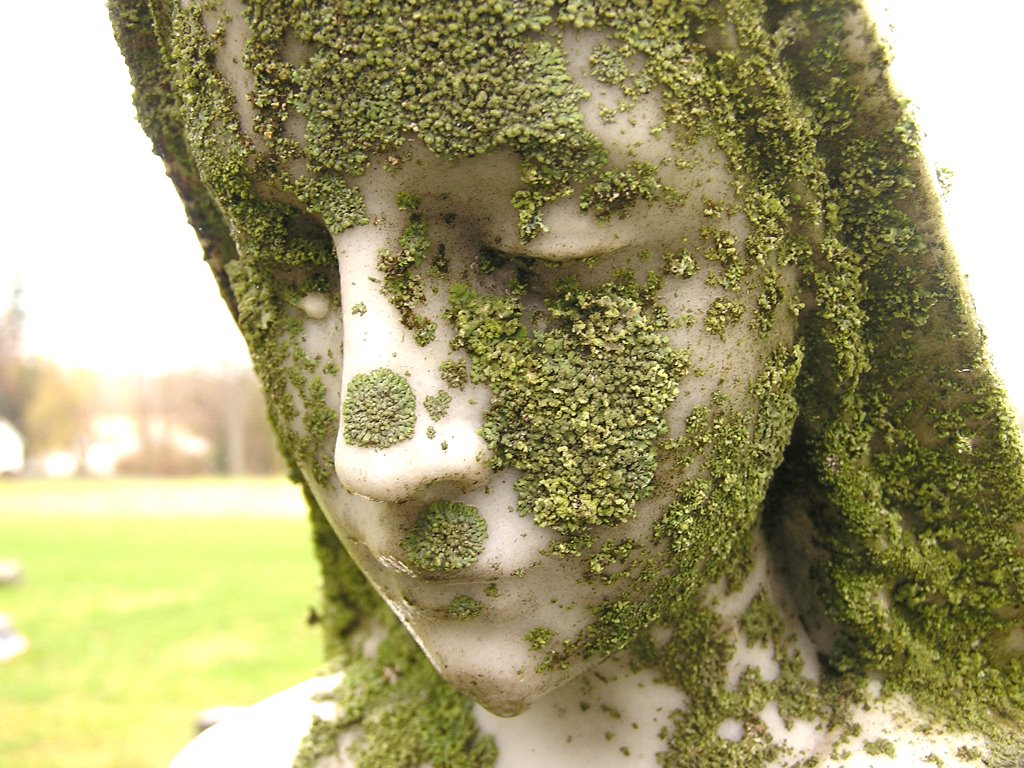
Graveyards as wandering places

Graveyards are at the same time comforting and so full of ritual and personal meaning that they are erie to me.

I started going to see the grave of my father's dad, Blackie, when I was very young. He had died in the 1970's and so our visits to his grave was one of the ways I could have a physical marker of his life and death. We would go to his grave in the early fall. My Yia Yia used to say that Blackie died "when everything else was dying," so she could never forget when the date of his death was approaching. Going to the graveyard usually meant walking straight to Blackie's grave, feeling some vauge sense of connection and loss and then wandering around the rest of the Greek section of the graveyard looking at names and dates and being surprised at the ages people had passed on.

As my sister and I got older we romanticised the graveyard in Cheyenne, WY (our home town) and I had elementary and middle school friends that would tell stories of going into the graveyard and having regular communications with specific people buried there. I was scared by their stories. I never really wanted the ghosts to talk back to me when we wandered around the head stones. But, I started to greet them and let them know about my day or how I felt being there. I still practice this and initially it has always been a bit awkward, but as I keep talking I don't doubt the feeling that I am being heard.

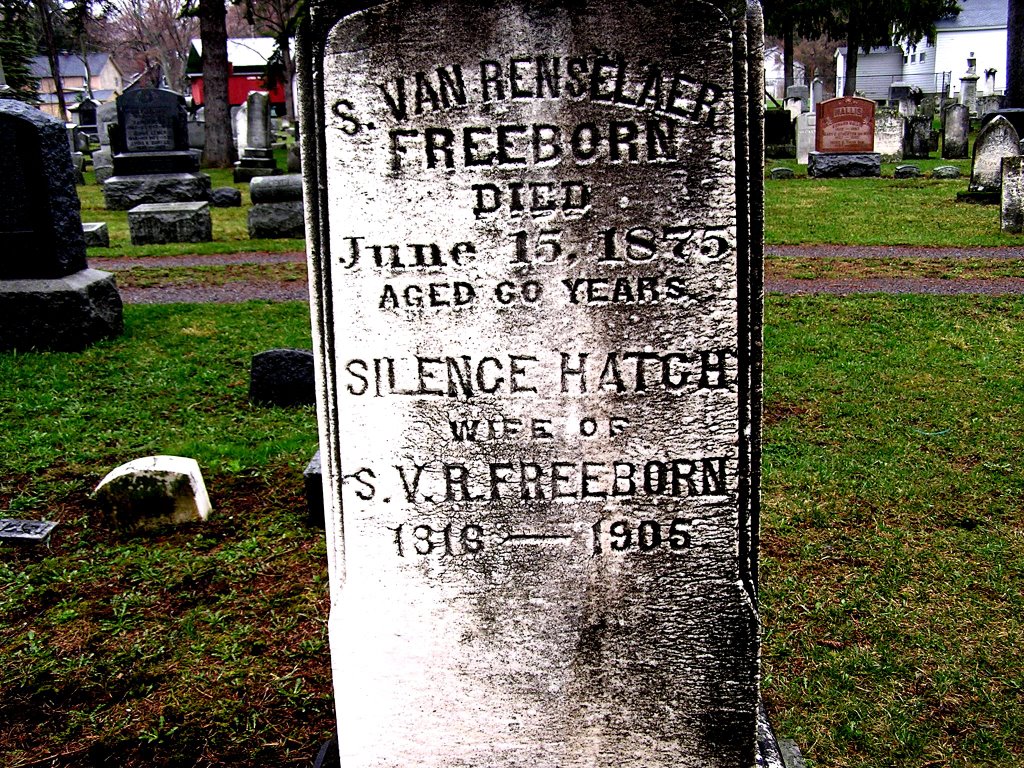
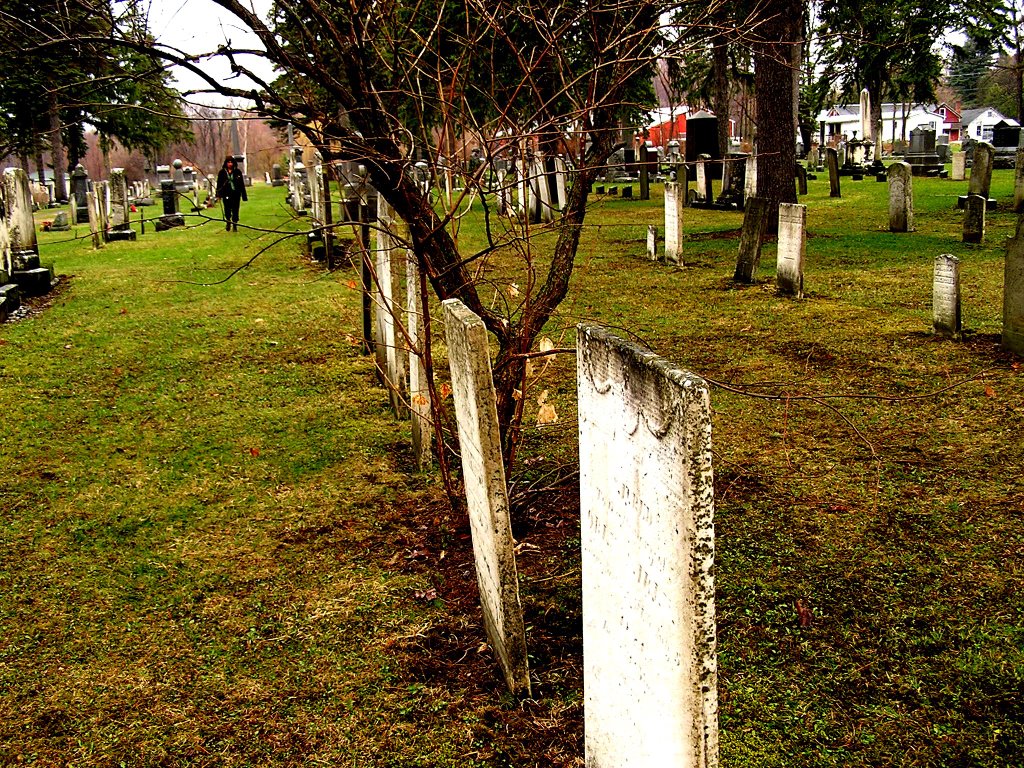
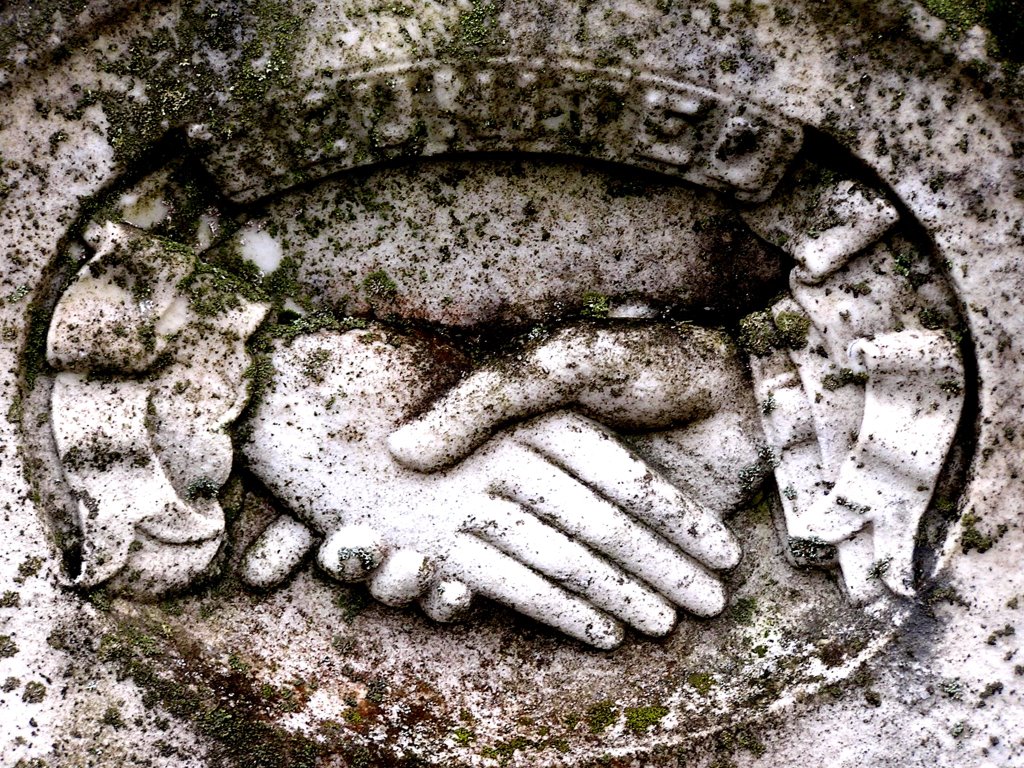
When Liz and I walked up and down the rows of markers and statues in the New Woodstock graveyard, I thought about how many times I have found a place to sit, talk, walk or explore inside the gates of graveyards in my home towns or towns that I only know from the roadway. I thought about how many times I have read the etchings on a stone and found out they were born on my birthday or died the random day I found myself in that graveyard. Reading those dates and feeling an instant connection with the person marked by them is an involuntary response for me. It allows me to feel full of purpose and respect as I wander above strangers buried in a ground that is regularly broken and remade in ritual.

So few "wandering places" in my life allow me to reflect on who has been there, what has been there, and what memories will stay a part of the place. I wander streets and find my grounding in symbols and cultural artifacts. I wander buildings and am always apprehensive. I wander around parks and squares, using the constructed focal points or meeting places for my grounding. I wander markets, filling my eyes and stomach with my grounding there. But as I walk through graves it is the markers of people, time, place, birth and death. So I had questions: should that information be explicit in more spaces, would people change the way they behave if that was more a part of daily life and the places we navigate? Should that information be more than just a plaque or statue when it exists as a memorial? Is it the enormity of so many plaques and statues in a graveyard that evokes such a sense of individual history? How do we do that, should we do that in other places? --by courtney

Saturday, April 15, 2006

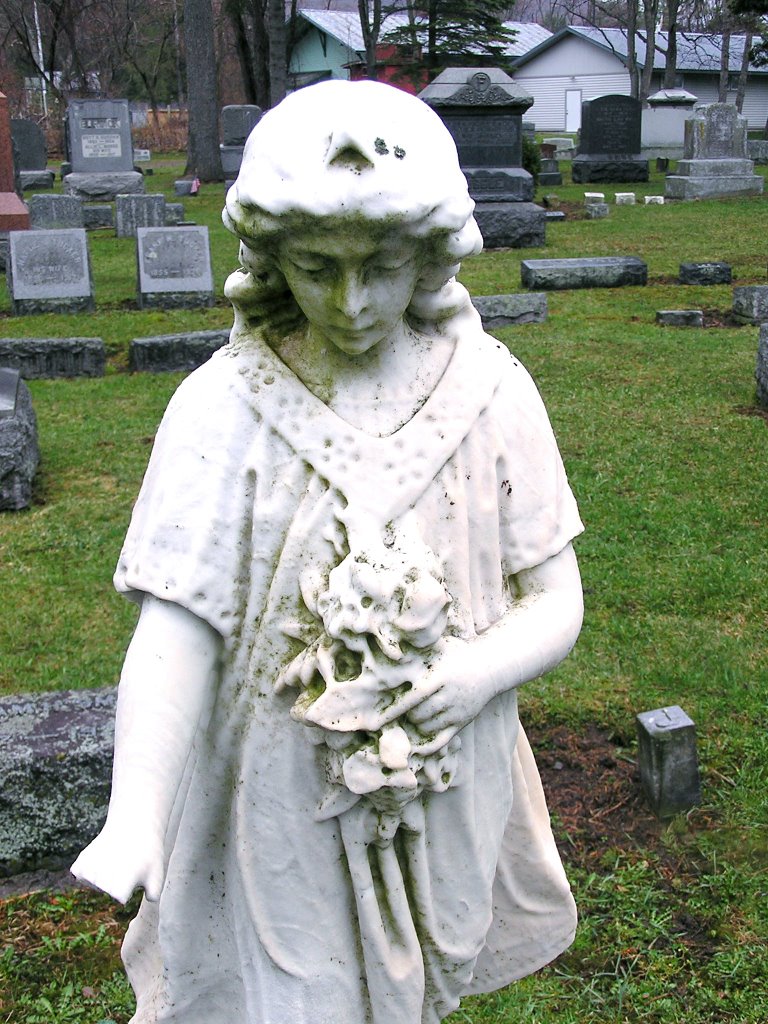
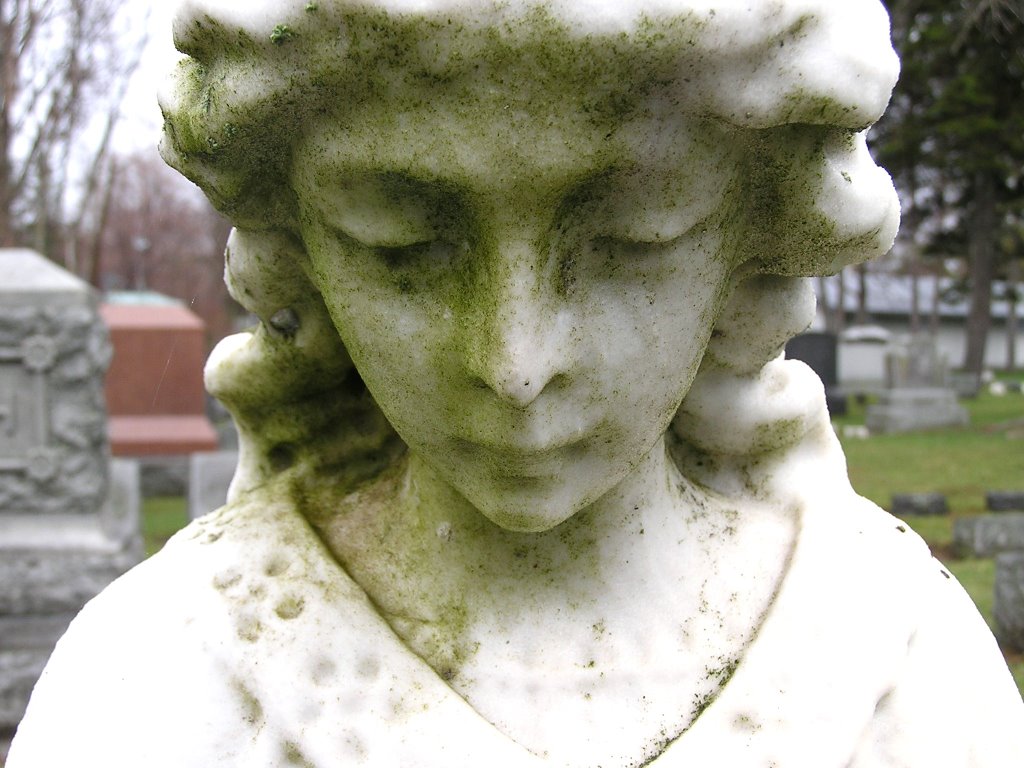
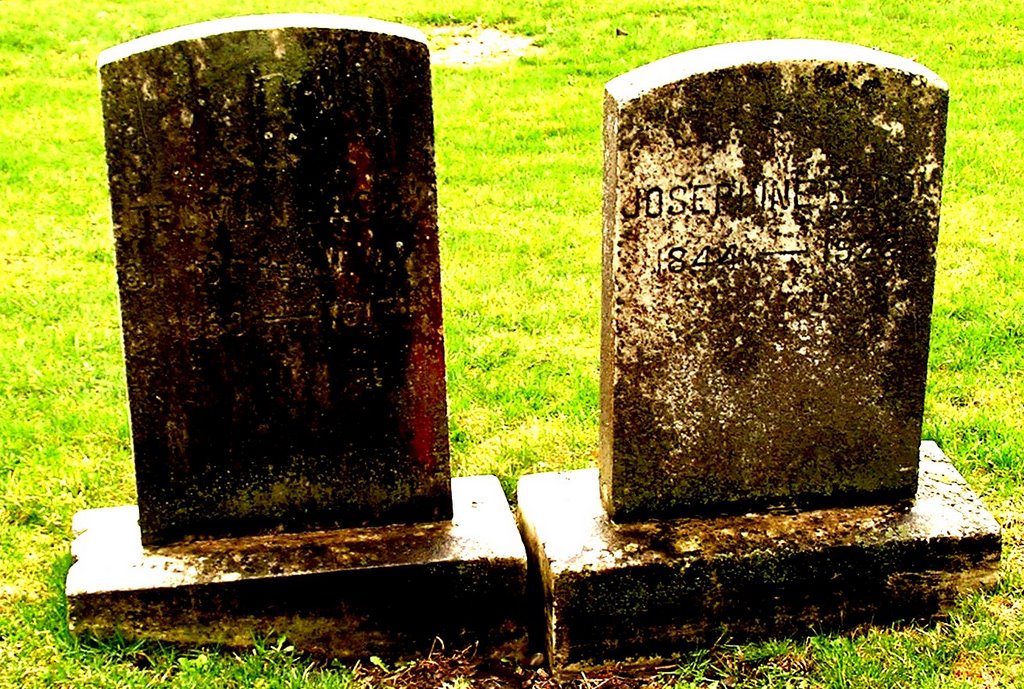
Graveyard in Upstate New York - on highway 13


a Photo Essay of the New Woodstock graveyard in upstate
New York on Highway 13.
(by liz)


i'll leave you with
another self portrait

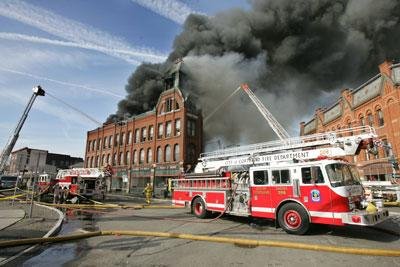
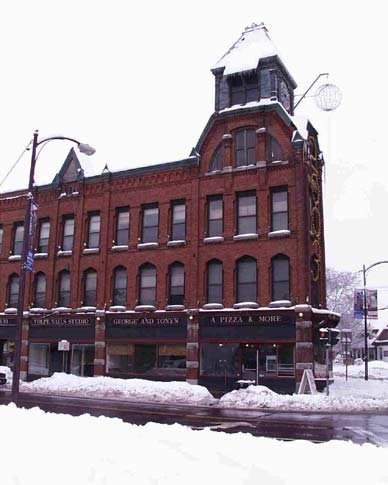
Clock Tower Apartments Fire in Cortland, NY


While we were in Syracuse, I was watching the news in my fancy hotel room and there was a story about a huge fire in an old (built in 1820) historic building in Cortland. The building was really old and a historic landmark and included a clock tower. It had at least 3 businesses in the bottom and about 30 students lived in apartments upstairs. Everything was destroyed but no one was killed.

I didn't really notice what city they were talking about on the news but then yesterday we rolled into Cortland and saw a burnt out, collapsed wreckage of a building and I realized that it must have been here.

We decided to stay in Cortland for the night. We walked around Main St. for a little bit and got delicious Lebanese food. We got a motel room at this place that really hasn't been changed at all since the 1960s probably. They had framed letters from their most famous guests (obscure congressmen from the late 1960s and early 1970s thanking the proprietor of the motel and saying how wonderful their sleep was). The old lady that showed us to our room started talking about the big fire: "It's a real tragedy. The clock tower building was just a real landmark in the community. And those students, they lost everything - All of their clothes, their computers, their term papers- everything." While Courtney went to get cash to pay for the motel I walked up to Main Street in search of the Salvation Army thrift store. I didn't find it so I decided to join the crowds and watch the demolition which was really about to begin at that point.

There were crowds of people on each of four corners, standing behind yellow caution tape as firefighters continued hosing down the wreckage and as some demolition machines circled around trying to decide how to begin the process of tearing down the entire structure.

It was like a real community event and everyone came out to watch the old building being torn down. Everyone seemed to know everyone else, even though Cortland isn't exactly a small town. Every time that someone came out of the tavern we were all standing in front of, they said hi to someone outside. "It's a shame that they couldn't save at least part of it." I stood there, watching the building being torn apart. I heard someone talking about how the owners decided to just have it levelled because restoring it at all would have been millions of dollars - and they had to do something quick, because the wreckage was blocking the state highway that goes through town and causing all kinds of delays and trouble.

There was a kid (about 4 years old) with his mom standing behind me, also watching the demolition. The kid kept saying, "We've just got to see them take down the part with all the glass. I know what they're doing, they're trying to figure out where to start... (as the machines paced back and forth). We have to say bye to the building ok?"

There were people on their cellphones frantically calling friends and telling them "They're tearing it down right now, get down here!"

The fact that the whole town seemed to be out to watch the demolition made me think about how important buildings can be to the identity of towns and communities. The building has been around for over 100 years and was one of the most prominent features of the downtown landscape. Now that's gone. No matter what they put up in its place, it won't be the same. It's weird to think about the way that physical features in urban areas can affect communities and the way that people interact with each other and the landscape.


before the fire.